Since the 18th Century, Macclesfield and the surrounding towns and villages found wealth through the weaving and printing of silk, an industry that was strongly influenced by European technology and skills, and the vagaries of wars and trade. As Nigel Bruce discovered on a cyle tour of silk industry heritage around Macclesfield, processing of this highly sought-after fabric lives on in the beautiful landscape of East Cheshire, not just in memory at Macclesfield's Silk Museum, but also (just about) through a few remaining local industrial enterprises.
How did silk manufacturing come to Macclesfield?
“It was Charles Roe who really gave the silk industry here a jolt by importing Italian throwing machines, then the most advanced in the world”, explained Tim Lightfoot, a retired police officer now sharing his passion for social history as a guide at Macclesfield’s fascinating Silk Museum. “Just nearby,” he added, “you can see the plaque commemorating Roe’s work and the stream with old sluice gates off Pickford Street that powered his machines.”
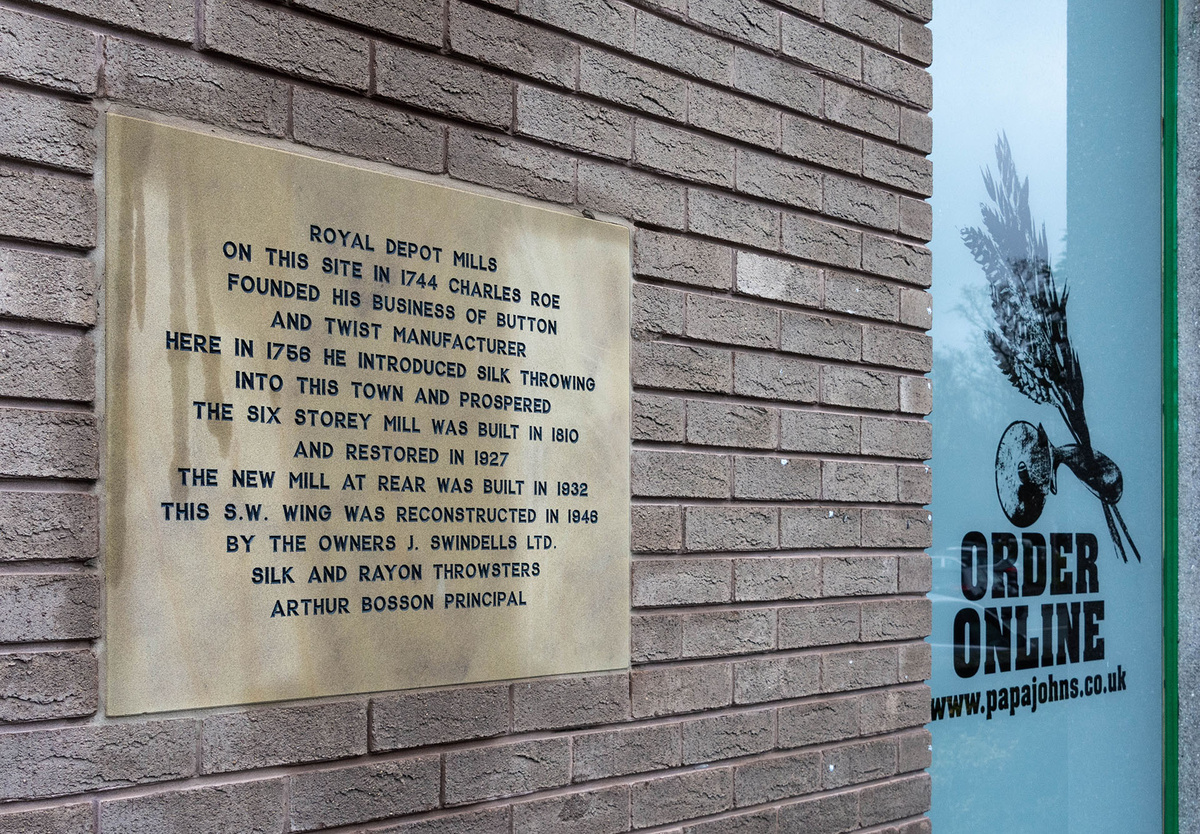
The plaque commemorating Charles Roe's investment in ‘state of the art’ Italian silk throwing machines in 1756
The plaque notes how Roe ‘prospered’ from this investment. “Others could see him making serious money”, said Tim “and they moved in; they could also see the real wealth was in weaving, which led to the mills.” And that is when Cheshire’s silk industry really took off.
This is very much a Cheshire story, which started with local entrepreneurs and working people using silk to add a luxurious finish to buttons, the manufacture of which was already well-established in the area. It is also a story of the powerful impact of European technology and expertise on the fortunes of the industry, along with the influences of war and trade across the Continent.
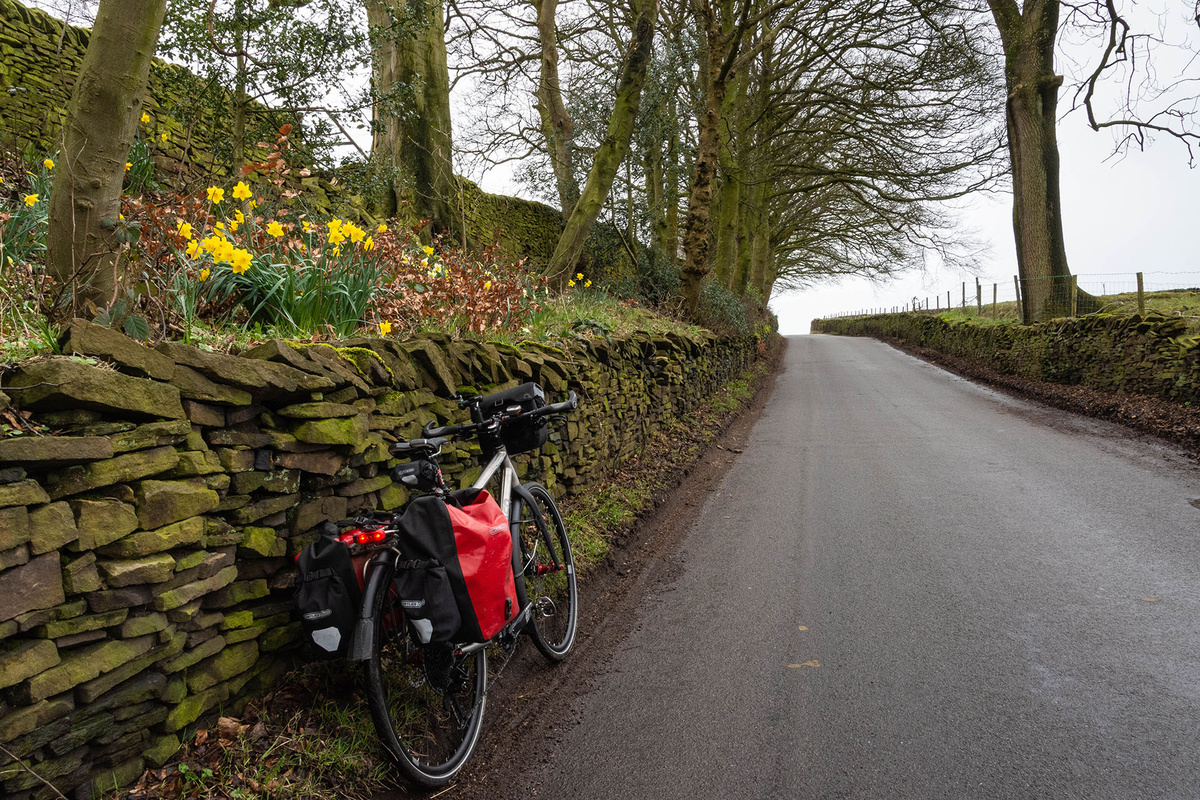
I explored Cheshire’s silk heritage by bike, taking two days to get a feel for the landscape, the rivers that powered the machines, and to seek out other traces of this once great industry in old mills, weaver’s cottages and the grand houses of the industrialists.
The Macclesfield Silk Museum – a great starting point for exploring the history of silk in Cheshire
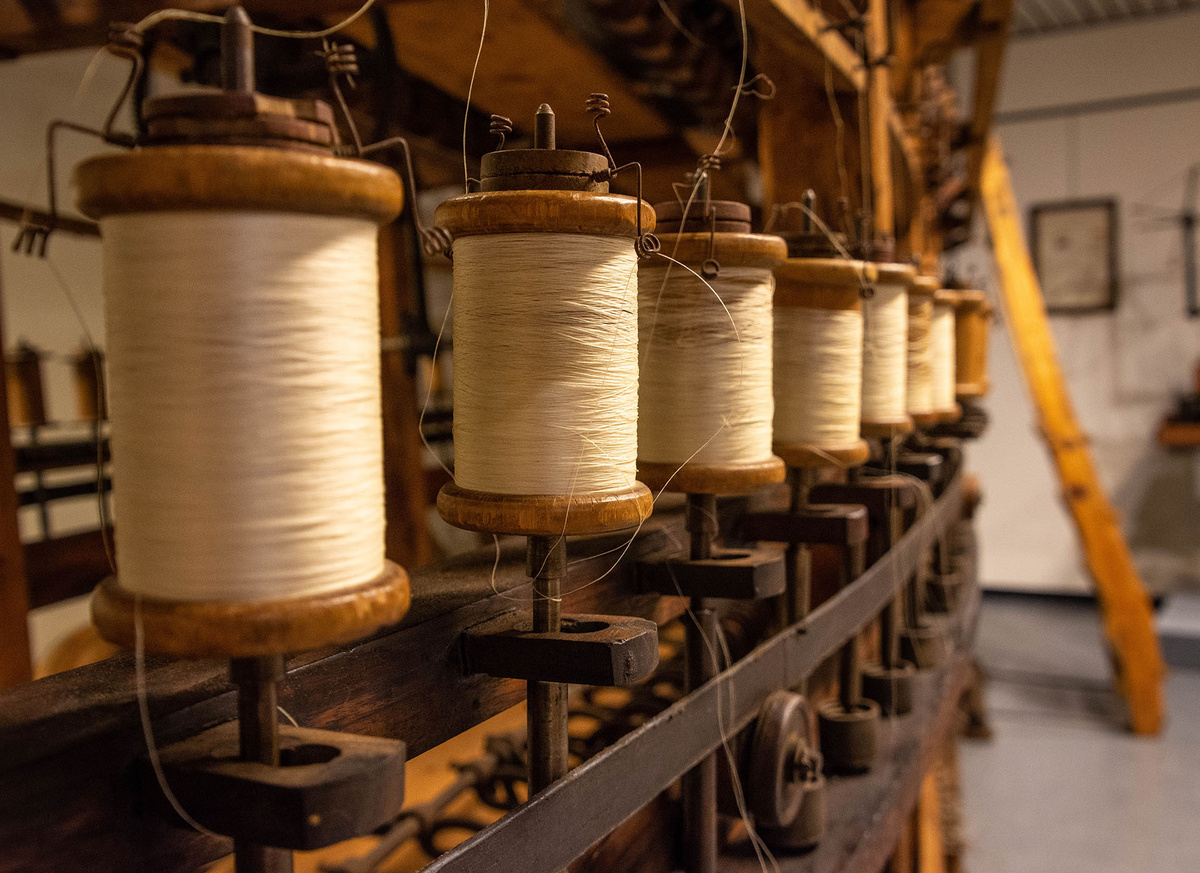
Macclesfield Silk Museum seemed the obvious starting point. Full of remarkable information, stories and artefacts, the jewel in the crown is a guided tour of the extraordinary Paradise Mill, just nearby. Frozen in time when the business closed in 1981, a whole floor houses Europe’s largest collection of Jacquard hand looms in their original location. Their operation is expertly explained and demonstrated by volunteer guides, including Tim and his colleague Trish Halloran.
I might add that cycling the steep lanes of East Cheshire's can be very hard work, but it turned out to be very rewarding.
 A transformational technology
The invention in 1804 of the Jacquard loom not only revolutionised patterned weaving of silk and other textiles but also stimulated the science of computing.
Frenchman Joseph Marie Jacquard, working for his master-weaver father at the laborious task of manually lifting warp threads (it was these that controlled the pattern woven into the fabric), starting building upon earlier French innovations to create an automated system using punched cards.
The Paradise Mill
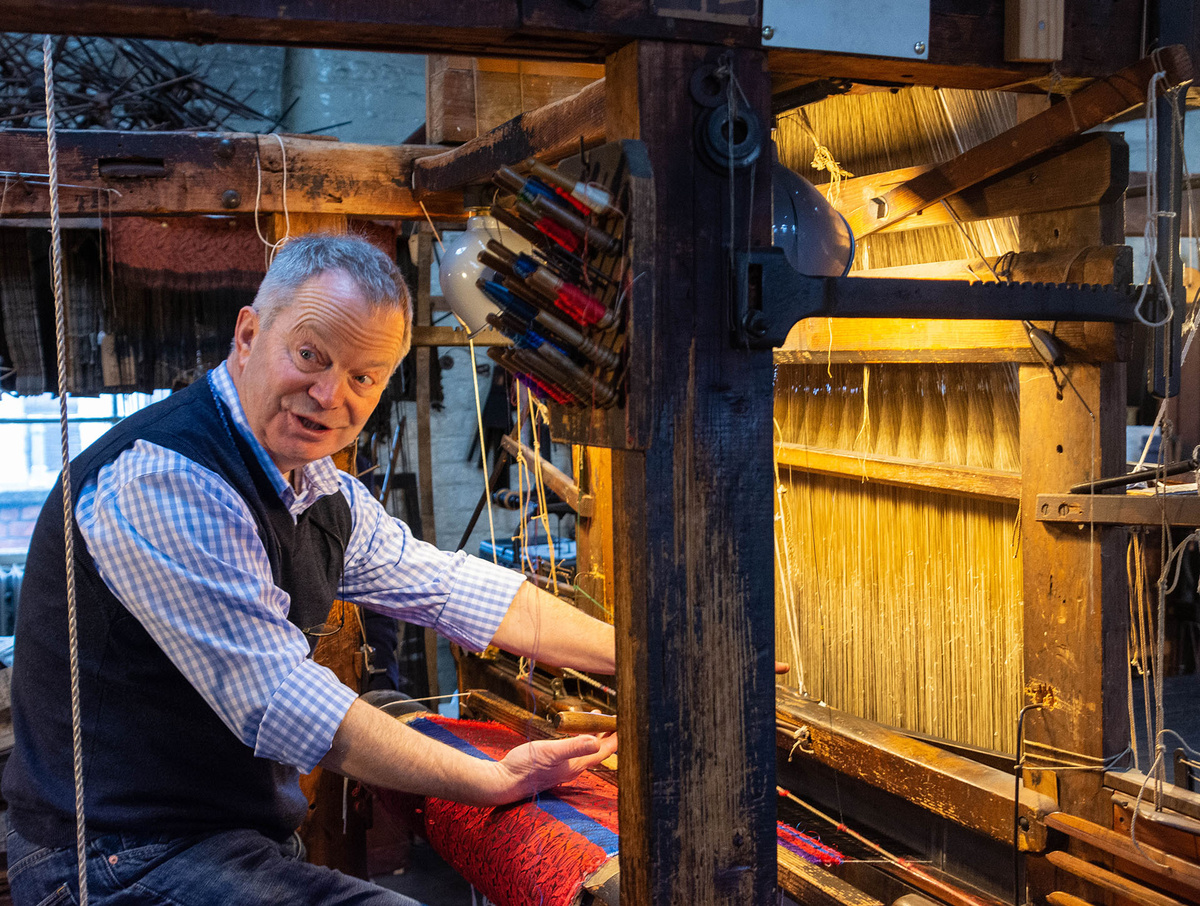
Watching this ingenious device in operation on the Paradise Mill looms, it is easy to see the dramatic impact it would have had on the speed at which patterned silk could be woven. Jacquard looms did not have a significant impact on silk weaving in Britain until the 1820s, however, due to the Napoleonic wars of 1803-15.
Human and political influences on the fortunes of silk manufacturing in Cheshire
In addition to the impacts of European technology and wars, there were also important human influences on silk manufacture. French protestant Huguenots, many of whom were expert silk weavers, had settled in London’s Spitalfields as refugees fleeing an upsurge in religious persecution following the revocation of the Edict of Nantes in 1685 by Louis XIV. Their weaving skills, poetically referred to as ‘The Mysteries of The Strangers’, led to the development of a vibrant silk weaving community in East London. Some of these Huguenot weavers moved north to Macclesfield, others to Sudbury in Suffolk which today is the largest centre of silk manufacture in Britain.
One of my favourite items in the Silk Museum was a dress made from the silk emergency maps used by RAF pilots in the Second World War. The rich variety of this collection is also illustrated by the cases of Egyptian artefacts and the story of how they came to be here in Macclesfield. In 1873 Marianne Brocklehurst, whose father was the silk manufacturer John Brocklehurst, set off with her companion Mary Booth (collectively, these two ladies were referred to as the ‘MBs’), to travel up the Nile, exploring and helping to conserve Egyptian history through their association with Amelia Edwards, founder of the Egyptian Exploration Society.
Day 1 ride: A circuit from Bollington via clues to silk heritage on the borderers of the Peak District
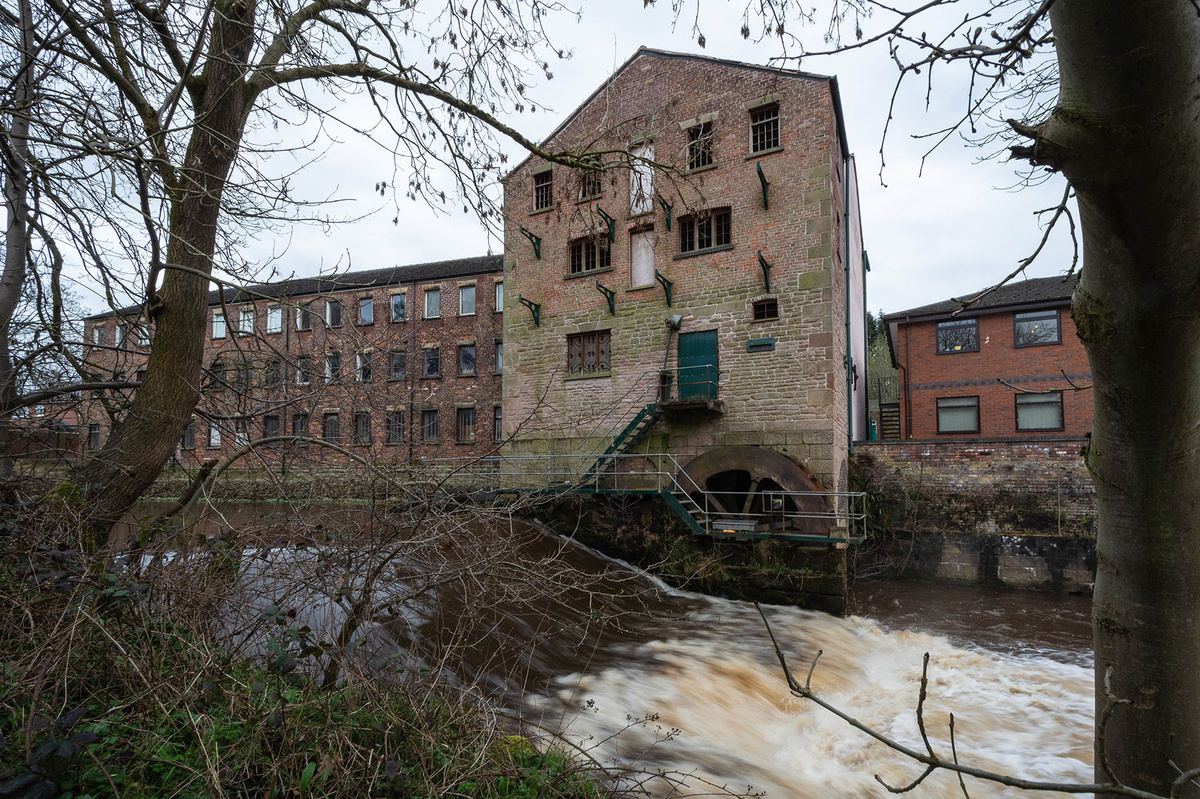
Impressed by what I had seen in the Museum and Paradise Mill, and with some foundation of knowledge about Cheshire’s silk heritage, it was now time to get on the bike and explore the area that saw this fascinating industry develop. I began in Congleton at the former silk mill at Higher Washford. Beside the mill, which retains an impressive 5.5 metre diameter cast-iron waterwheel, the river Dane flows dramatically over a weir, demonstrating the power available to drive the spinning machines and looms.
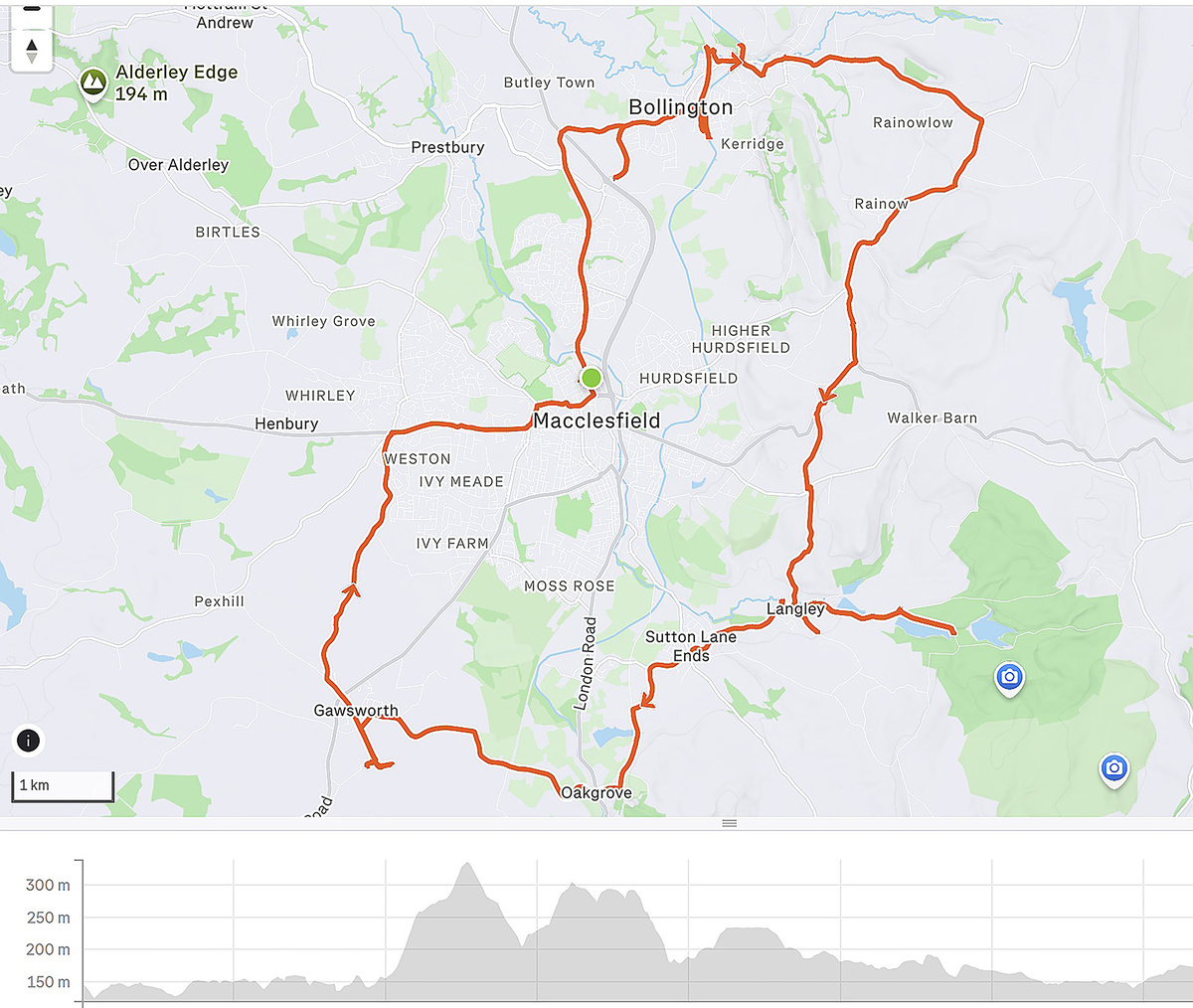
![Day 1 ride: Map of my southern loop ride starting from Bollington. The profile graphic shows the very hilly nature of this part of Cheshire [ recorded in Strava]](https://assets.netl.io/media/bruce/Silk_route_map_A_southern_loop_PS_Crop_300_dpi_1920_px.jpg)
Riding out of the town via the Biddulph Valley Way, I climbed up around The Cloud – that impressive prow of sandstone visible right across the Cheshire plain - and on through quiet, pretty lanes to Danebridge with its own intriguing links to the silk story.
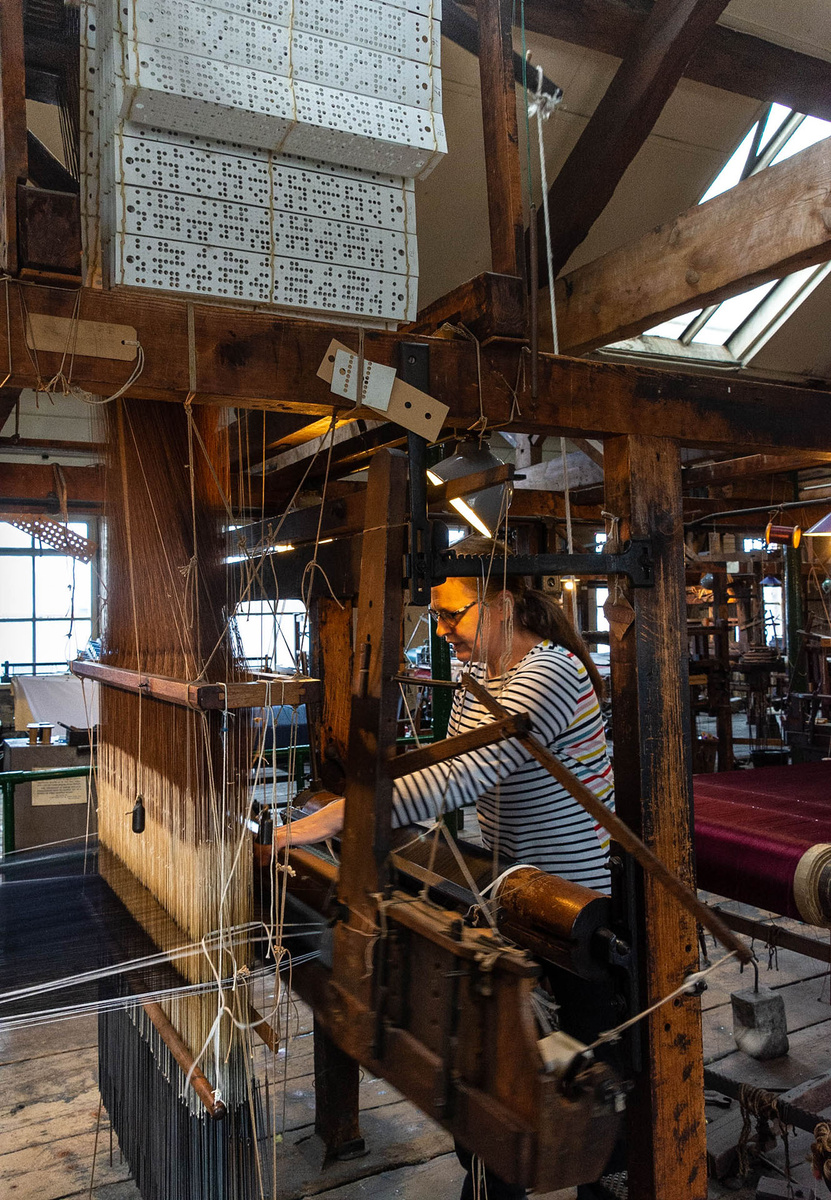
Landscape – so easily appreciated from the saddle - holds many clues, some quite subtle. It was through a passing comment from Tim Lightfoot as he wove and talked, that my attention settled on the verdant moss adorning the stone walls following the sinuous contours of the Peak District’s western flank. “Another reason for silk being here is the climate,” said Tim. “It is damp, and that helped to keep the thread pliable, avoiding breaks.”
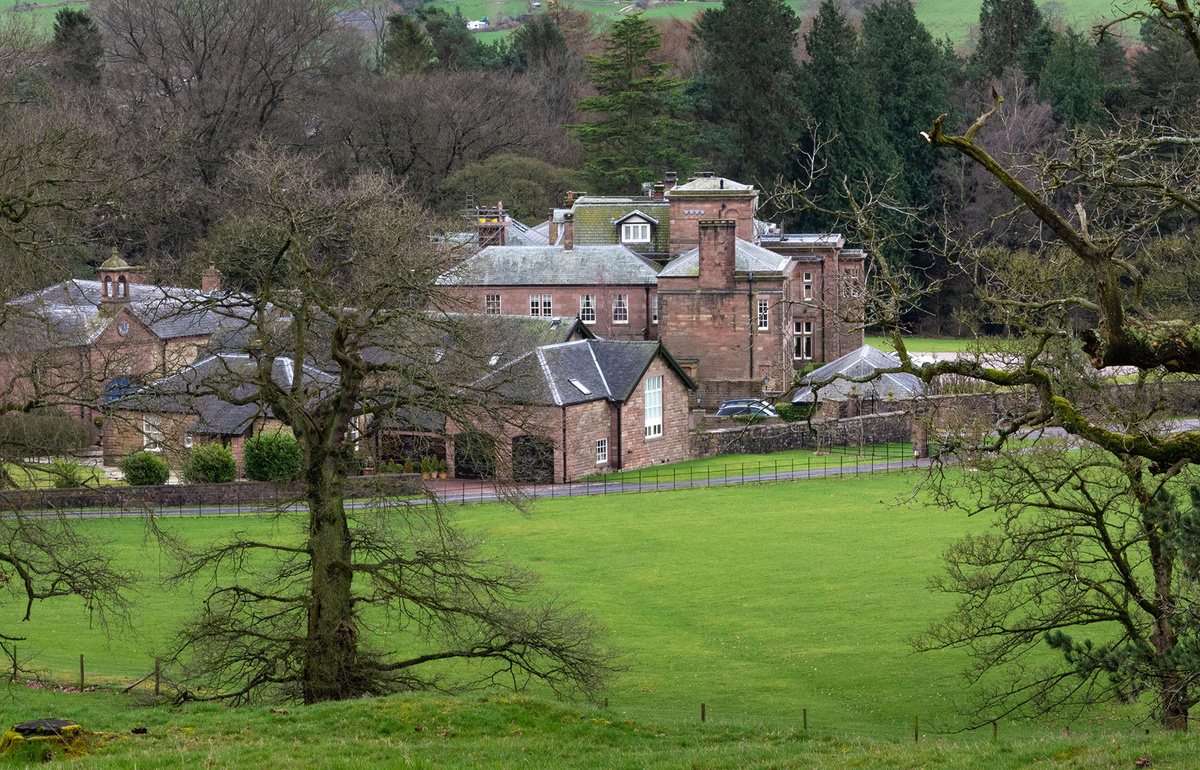
Just before Danebridge, I passed Swythamley Hall, once home to the silk manufacturer, banker and Liberal MP John Brocklehurst, whose daughter was the Egyptologist Marianne.
A Ship Inn many miles from a navigable river or the sea?
Needing refreshment, I headed to The Ship Inn at Wincle, one of my family’s favourite stops on walks in the surrounding hills. This time, I was determined to solve the mystery of its name and the painted sign illustrating a late 19th Century vessel held fast in a frozen landscape (see photo caption for the answer to this mystery).
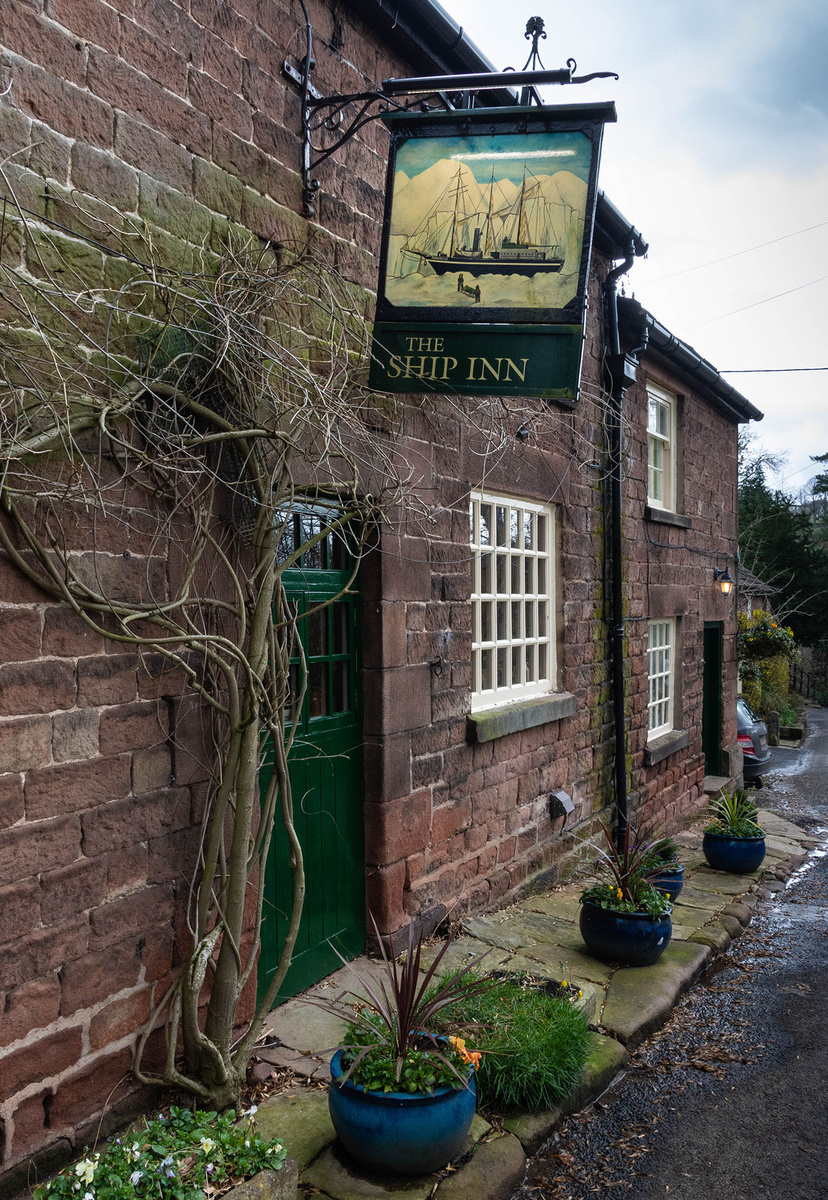
A solid, comfortable looking house, known as ‘Bagstones’, set in a pretty, mature garden on a lane not far above the Ship Inn, was once the home of the ‘MBs’. Finding this house completed my silk trail around this prettiest of stone-built villages, nestling among steep wooded hillsides that run down to the rushing waters of the river Dane.
Wincle’s setting beside that river means that the cyclist cannot escape from this little haven without tackling one or another very steep hill. Selecting a low gear and a positive mental attitude, I headed slowly north, crossed the A54 road from Leek to Buxton, then rode along the dramatic ridge of Barlow Hill, exposed to the full and exhilarating force of a vicious spring storm.
Beyond Haddon, and much as I love storms, I was by then very relieved that my route descended rapidly into the sheltered Bollin valley at Sutton Lane Ends. From here, my route back to Congleton took me through Gawsworth, famed for its beautiful 15th Century Elizabethan Hall. But it was the early 18th Century Gawsworth New Hall that I particularly wanted to see, as this was once the home of William Birchenough, another of the Macclesfield silk company owners.
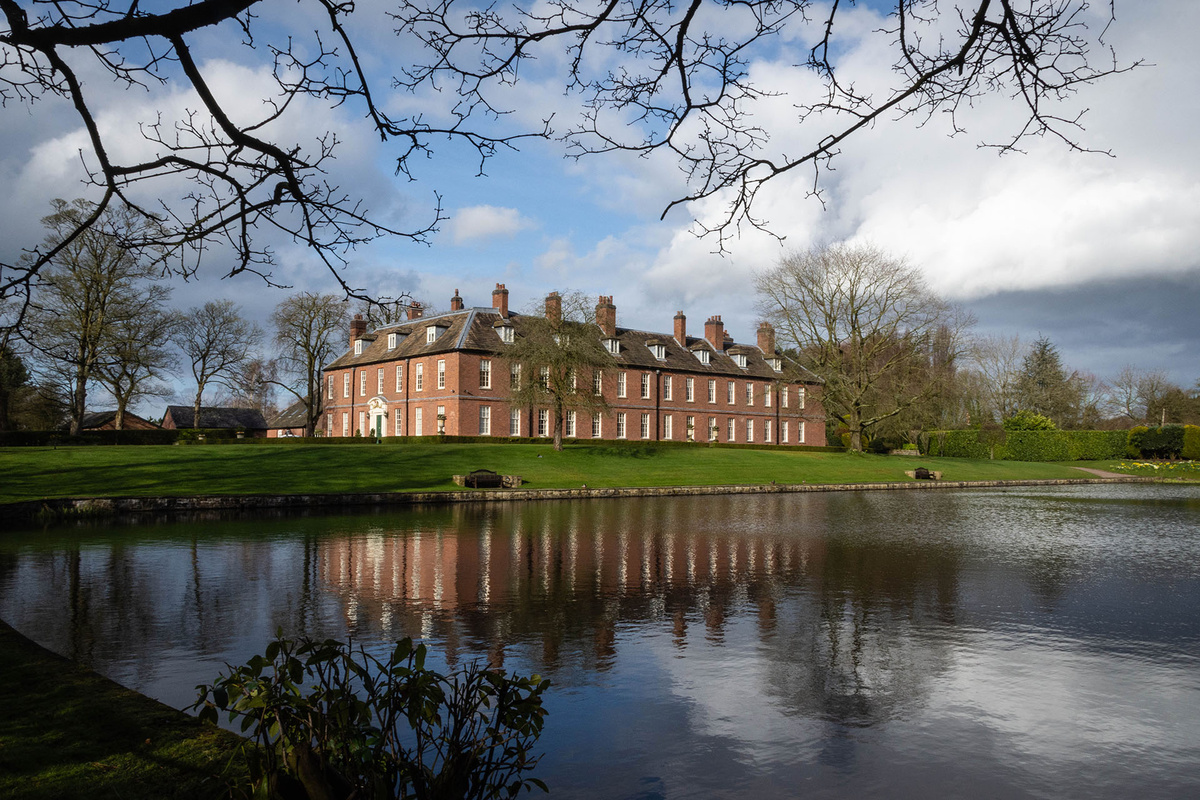
Construction of this Grade II* listed stately home was started in 1707 by Lord Charles Mohun, an indebted, gambling landowner and Whig politician. His fondness for fighting duels led to his demise when he was killed in November 1712 in a famous contest with James Douglas, 4th Duke of Hamilton with whom he had a long-running dispute over the estate. While estate ownership was ostensibly the pretext for an encounter that proved fatal for both contestants, the real story may lie with an attempt to silence Mohun’s opposition to efforts by Hamilton, at that time a special envoy to Paris, to secure peace in the War of the Spanish Succession, although exactly why that should have justified a duel has remained elusive.
Day 2: Weavers homes and silk manufacturers in Cheshire
Inspired by how much I had already discovered on the bike, I stayed over in Macclesfield and the next day set out on a second ride that took me north out of Macclesfield, through Bollington, and back into the hills. Early in this ride, I climbed the aptly named Blaze Hill, a truly beastly challenge that ascends 180 metres over 2.5 km with a maximum gradient of 14.5%.
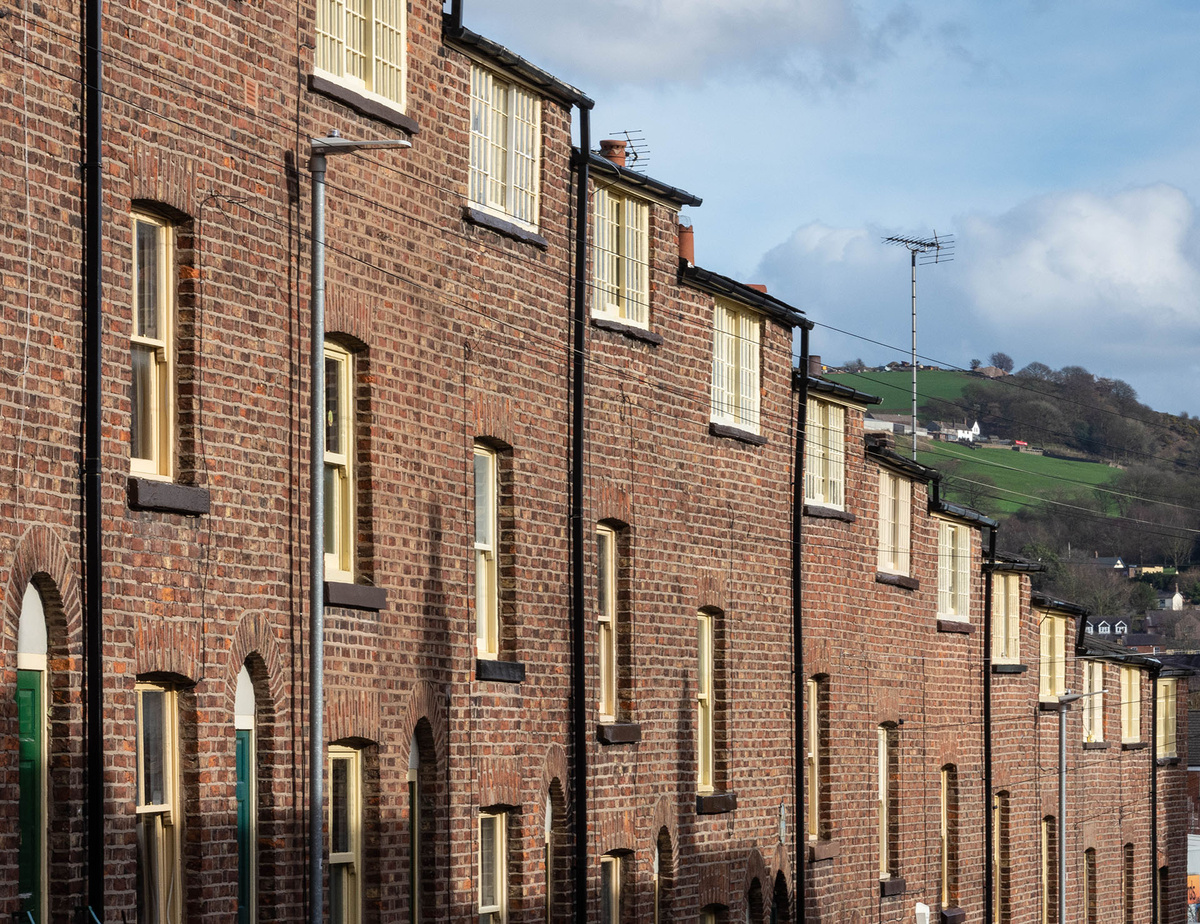
This brought me to Rainow, and then over to Langley where weaver’s cottages, like those in Paradise Street in Macclesfield, demonstrate the large attic windows designed to provide good light for the throwing machines and looms. Langley is also home to Adamley, a high-quality silk printing enterprise using silk screen and digital printing and housing a large archive of historic print designs https://adamley.co.uk/
On my tour, I visited another one of the Cheshire’s (at that time) thriving textile companies, RA Smart Holdings of Bollington, which specialised in patterned weaving and printing of silk and other fabrics. It is fittingly situated beside the old Adelphi Silk Mill, the Macclesfield Canal and the former railway which is now the Middlewood Way.
The owner, Ron Smart, whom I met and who kindly showed me around the factory, brought a silk screen printing concern here from northern Italy after working there for a several years, and developed this through the 1980s. He had developed sophisticated silk screen, acid dye and digital printing facilities and was running four Jacquard looms producing, among other designs, the sought-after ‘Macclesfield Neats’, so favoured for ties.
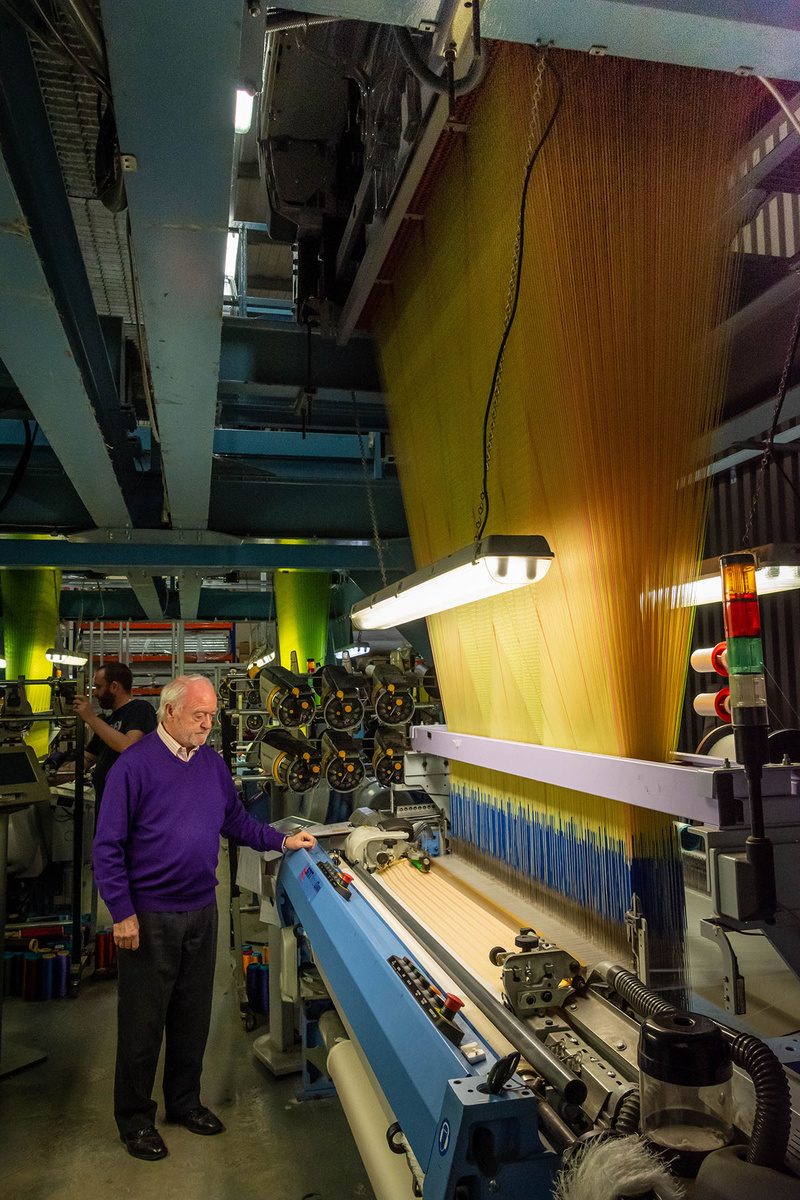
Glancing up at the portrait of Joseph Jacquard in his office, he explained that he still values his links with Italy; “I have taught the staff, all of whom are local, but my source of knowledge is from Como, my mentors are in Como”.
Watching the high-speed looms in operation was an impressive sight, especially as I reflected that the Jacquard ‘heads’ were simply an up-to-date version of an early 19th Century invention, controlled by software and computers rather than punched cards. The looms and most of the other technology that Ron Smart uses are all European, with the exception of the digital printers which are Japanese.
“The British technology is long gone, long gone”, he mused. “I chose the Italian Jacquards and looms so I could always ring them and say what do you think ...”.
While China remains the source of Ron Smart’s raw silk, the thread is processed in Italy; “I use an Italian supplier because of the quality”, he said, adding that “this is particularly important for the warp threads - the looms run so much better”.
Like Adamley, Ron Smart’s textile business seemed to be thriving at the time of my rides and visit to the factory , reaching markets in Europe, Asia and the US, and he felt that his personal links were strong enough to protect him against future changes in trade relationships with Europe (i.e. from Brexit). Sadly, however, in April 2026, RA Smart (Holdings) became insolvent and is currently in administration, with the industrial units and machinery up for sale, so this silk weaving and printing business has finally closed down and joined the long list of local silk enterprises that eventually fell victim to economic and political forces. I recently met with Ron Smart again at his office where he is managing all the affairs of wrapping up the business. “ We lost business during the Covid pandemic,” he said, “ and sadly it never properly recovered, “So with fixed costs rising, it has not been possible to maintain a sustainable business, and our closure will leave a big hole as there is no one else in the country doing the weaving and printing (especially the acid dye printing of fabrics such as cashmere wool) that we were able to produce”. I asked exactly which among these ‘fixed costs’ were the culprits, to which he replied “Well, the usual … it’s increasing labour costs, with higher national insurance and pension contributions, and energy – we pay far more for energy here in the UK than they do in Europe and it’s not easy there either.” The portrait of Joseph Jacquard, I noted, still hangs above the desk in Ron’ Smart’s office.
Historically, the fortunes of Macclesfield’s silk industry have fluctuated greatly with events across the Channel. Huguenot (French protestant) refugees brought their silk weaving skills, and Charles Roe kick-started the industry with Italian technology. The 18th and 19th Century wars with France reduced access to the French silk desired by wealthy English women, so promoting the local manufacturing; at the same time, these conflicts delayed the adoption of Jacquard’s transformational technology in England. Business then boomed, until the late 1820’s when European free trade agreements reduced tariffs on imported French silk. There were further ups and downs, with production of parachutes in WW2 (until the use of nylon started in 1942), then decline once more as textile manufacture moved to Asia.
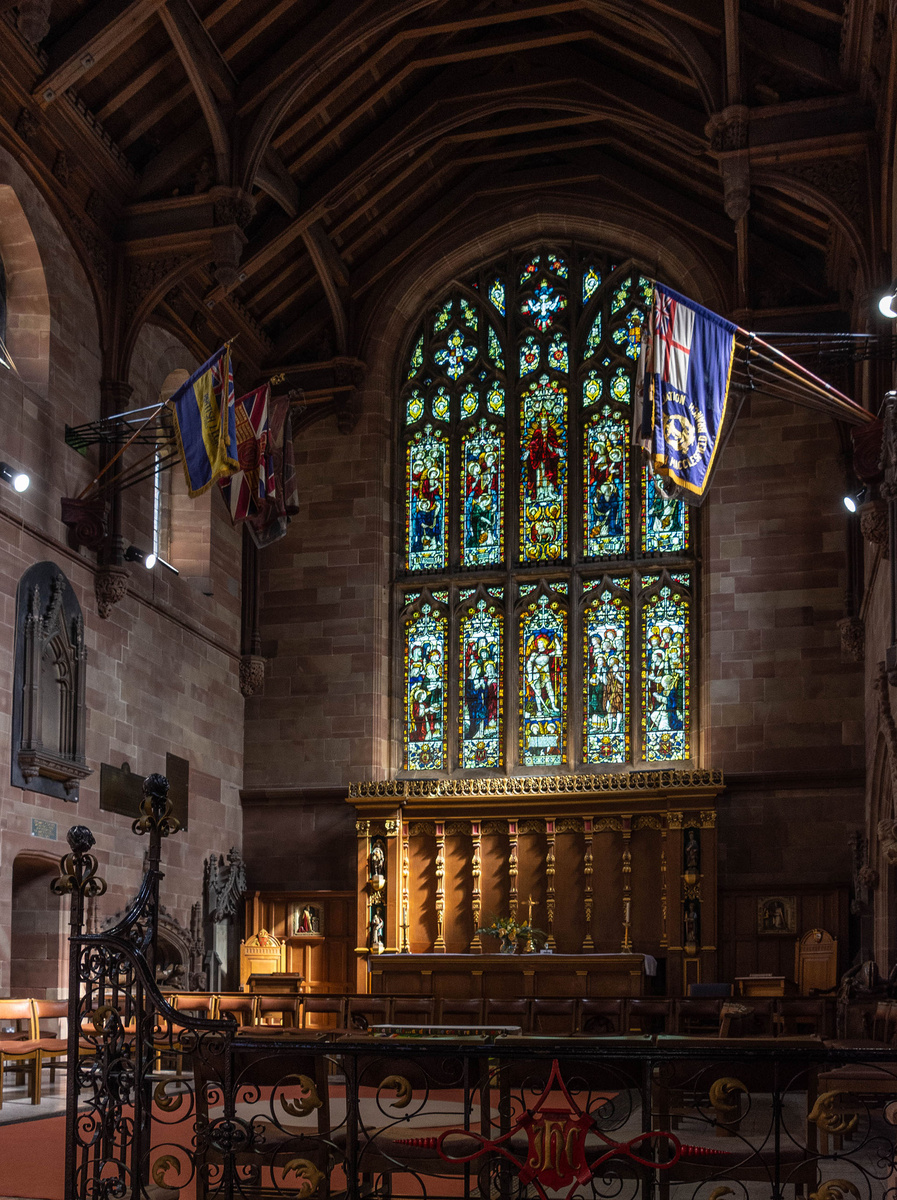
The memorial window to Martha Brocklehurst in St Michael's church, Macclesfield
Cycling back into Macclesfield, the traces of silk are everywhere in the street names and buildings. Among the highlights are the weaver's houses in Paradise Street, Charles Roe House (now a wellbeing centre and cafe), and the Sunday School for the silk workers’ children. Among the churches are St Michael's with its memorial window to the Brocklehurst family, and Christ’s Church which was built by Charles Roe and is where he is buried.
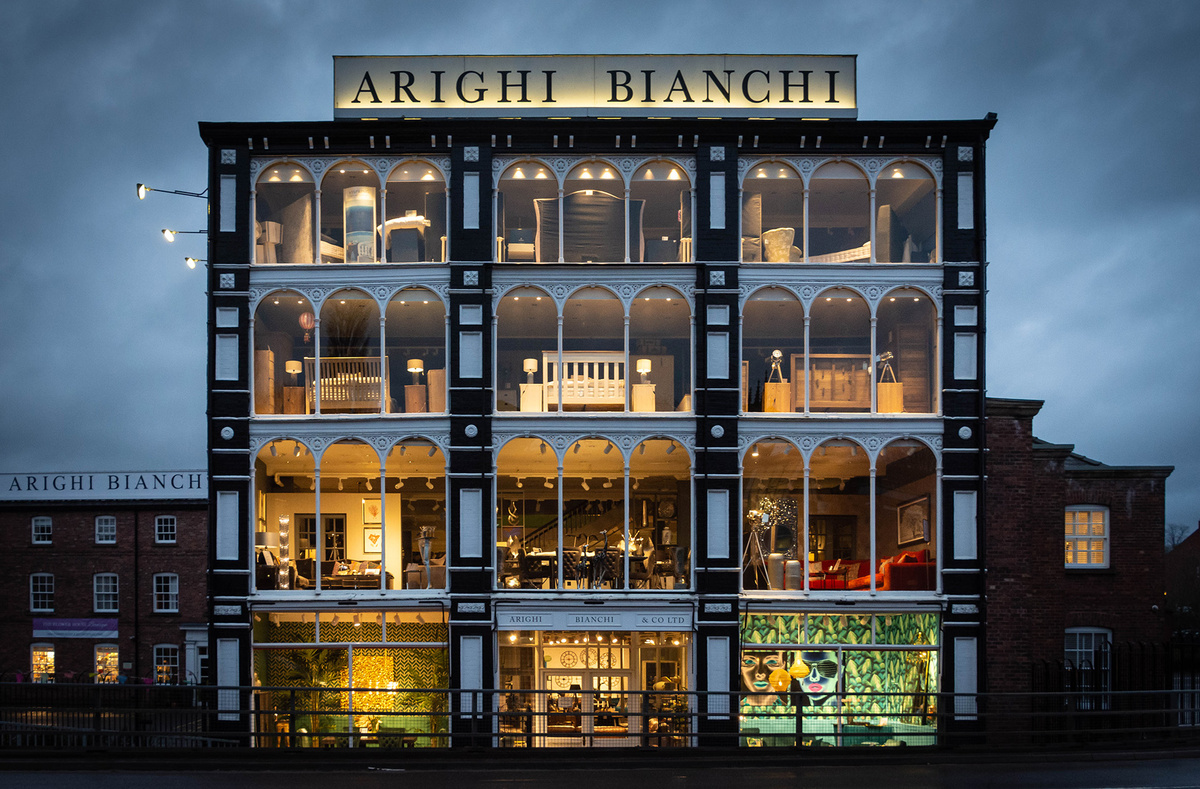
Opposite the Travel Lodge, itself converted from the former Royal Silk Warehouse, is the extraordinary Grade II* listed Arighi Bianchi building.
This architectural delight [illustrated in the header photo], best appreciated in the evening light, is another reminder, as if one were needed, of Macclesfield's links to the world of European silk and the impact of refugees fleeing conflict.
Antonio Arighi and his nephew Antonio Bianchi originally came from the silk village of Casnate on the shores of Lake Como in 1854 to escape the Italian civil war and established themselves as cabinet makers.
Macclesfield is looking to promote its links with China, building on its past and current industrial heritage, and on the idea of being located at the western end of ‘The Silk Road’ stretching from the Far East to Europe.
One other active silk business (supplying high quality silk, and patterned fabrics that were being printed by RA Smart’s company in Bollington) in this part of Cheshire is Bennett Silks based a little further north in Stockport. Established in 1904 by William Henry Bennett in Manchester, it is according to the company’s website, still entirely in the Bennett family's hands, run by William Henry Bennett's great grandson Mike and his wife Joyce, who are leading the company through further expansion with the establishment of substantial silk weaving interests in Europe, India & China.
The company web site goes on to describe their contemporary European partnership, and how in 2016, ‘a fifty percent shareholding was purchased in French weaving mill FCN Textiles, giving Bennett Silks its own European production facility in the heart of the French silk area in Fourneaux, a town to the northwest of Lyon. This acquisition proved even more beneficial in 2021, enabling the creation of Bennett Silks Europe to counter the extra charges and complications inflicted on EU customers since Brexit. Bennett Silks' EU customers can continue to order safe in the knowledge that their goods will be delivered exactly as they always have been with no extra charges or delays.’
All of which further emphasises the importance of connections of our island nation with the continent of Europe, and not just for silk.
Information and links
- Macclesfield Silk Museum: https://macclesfieldmuseums.co.uk/
- Paradise Mill guided tours (booking required) https://macclesfieldmuseums.co.uk/venues/paradise-mill
- Macclesfield Visitor Information Centre: https://www.visitmacclesfield.co.uk/macclesfield-visitor-information-centre/
- Museum of Silk, Como, Italy: https://www.museosetacomo.com/?lang_id=2
- Bennett Silks, Stockport UK: https://www.bennett-silks.co.uk/
- FCN Textiles (France): https://www.fcn-textiles.com/
All photos © Nigel Bruce 2019