On a bike you sense every turn, rise, and fall of the land, and feel the vagaries of the weather which warm or chill you, push you on, or beat you back. Cycle touring, apart from being a very practical way of visiting the many sites while carrying the kit needed for the journey, is perfectly suited to an exploration of the Western Front. For you feel, as well as see, the landscape and terrain. The effort of climbing up to higher ground, for example, does not pass unnoticed and offers pointers to military strategy, and the settings, aims, and outcomes of battles, trench systems and fortifications.
Cycling is also an ‘intimate’ means of travel, as it allows appreciation of people going about their daily lives, the roadside flowers, birdsong, architecture, and much else, for the senses are always alert and it is easy to stop a while when something catches your attention. This is all no doubt true of walking too, but on a bike one can cover enough ground each day to see striking changes in the landscape, and if not too hilly it’s possible to rack up the kilometres when time is short.
On my bike, I would be very close to the memory of what took place on the Western Front. Among many other details of these events, my IGN map of the Grande Guerre showed just how many battles played out across Belgium and France over the years 1914 to 1918. Some are well known, such as Passchendaele, the Somme, Chemin des Dames, Verdun, to name but a few. But many others are rather distant in popular memory, for example the Battles of Yser, Fromelles, Neuve Chapelle, Argonne Forest, Flirey-Remenauville, Grand Couronné, Trouée de Charmes, and Hartmannswillerkopf.
Even this list of lesser-known battles, which could easily be very much longer, does not include the multitude of smaller engagements, the wire-clearing and other operations, that left men just as badly wounded and just as dead. My ride would run through one terrible battlefield after another, each furnished with poignant memorials to those who lost their lives, or lived on scarred in mind and body.
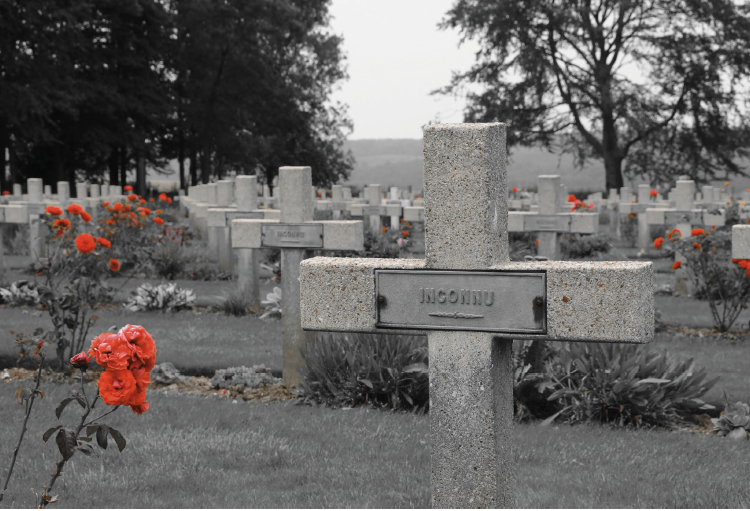
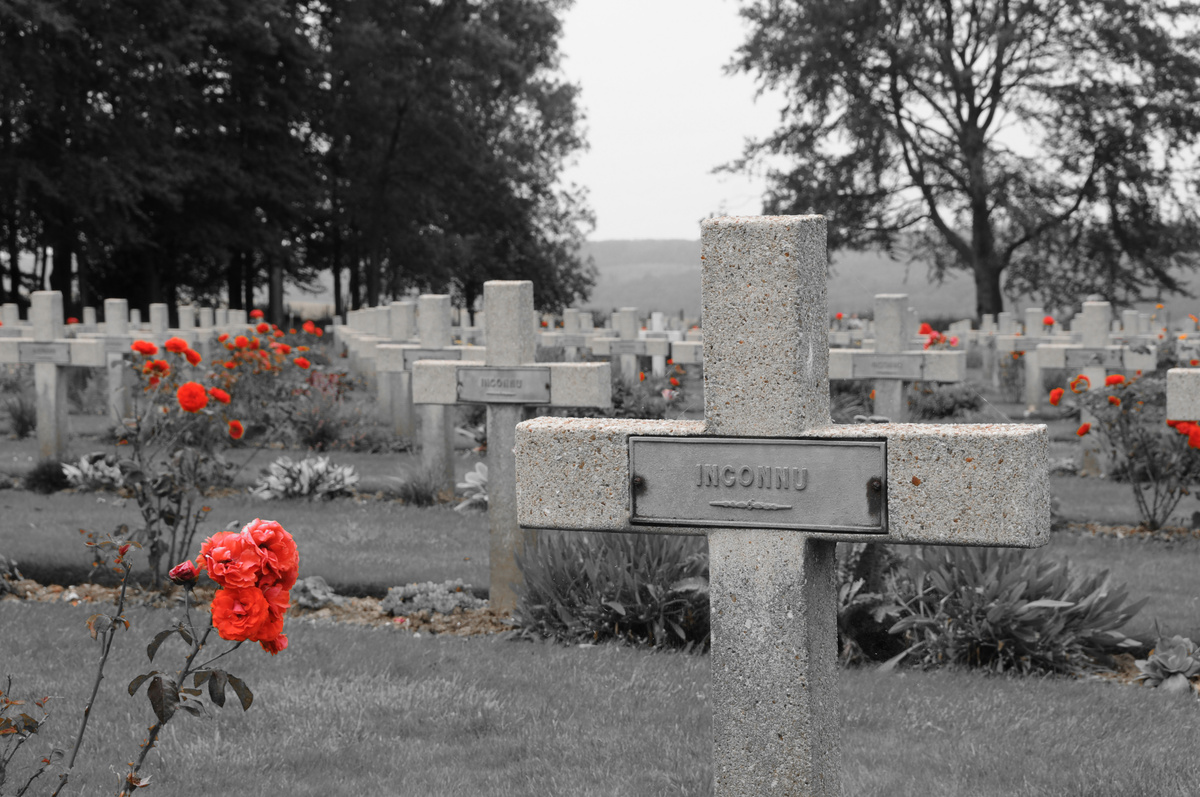
Graves at Thiepval marking the last resting place of French soldiers whose names are unknown (Inconnu)
I think it reasonable to assert that the Western Front is defined more than anything else by the deaths of millions of young men, the lasting mental and physical injury of millions more, and the destruction of countless homes and communities.
That grim reality would of itself, even if there were no other challenges, make this journey very different from my previous long-distance bike rides. The traveller cannot avoid some level of engagement with this consequence of exploring the Western Front, and I had been wondering how being immersed in such a uniquely challenging milieu for the best part of a month would affect my own state of mind. It was an important question to address, not just for my own mental health, but also because I would be a war tourist and needed to reflect on my attitude to visiting serial killing fields, memorials and other evidence of this carnage.
Would I, after a few days, become too numb to understand any more, or to show the respect that was due? Or would I perhaps become so upset and sickened that I might turn my back on the adventure and go home, or maybe use the time I had set aside to head off somewhere else promising a less emotionally draining adventure?
Such reactions will vary from one person to another, reflecting the vulnerabilities and resilience that each of us possess. I recognise in myself a heightened sensitivity to loss, easily brought to tears by situations, stories, poetry, music and films that convey this theme in one form or another. I know there are reasons for this lurking in the depths of my early years and family life. A brief account of those times will provide some context, and maybe strike a chord with others who make this journey with similar sensibilities. I’ll start with a few words about my parents.